Coco Chips vs. Orchid Bark: Which Substrate Lasts Longer?
Which Lasts Longer: Coco Chips or Orchid Bark?
Coco chips last significantly longer than orchid bark.
Orchid bark typically decomposes within 12–18 months, while coco chips can last 3–4 years under normal indoor conditions.
Longevity matters because decomposed substrate reduces aeration and increases root disease risk.
Why Does Orchid Bark Break Down Faster?
Orchid bark is organic wood material that naturally decomposes due to:
- Fungal activity
- Repeated watering cycles
- Microbial breakdown
As bark breaks down, it becomes compact and retains excess moisture. This reduces airflow to orchid roots.
How Durable Are Coco Chips?
Coco chips are made from coconut husk, which has high lignin content.
Lignin slows decomposition, making coco chips structurally stable for several years.
This durability means:
- Less frequent repotting
- More consistent drainage
- Lower long-term maintenance
Which Is Better for Phalaenopsis Orchids?
Both substrates work, but coco chips provide more consistent long-term structure.
Phalaenopsis orchids prefer:
- High aeration
- Fast drainage
- Moderate moisture retention
Fresh orchid bark performs well initially. However, after one year, compaction often begins.
Coco chips maintain airflow longer, reducing root stress.
Switch to a Longer-Lasting Substrate
Choose durable coco chips that maintain airflow and structure for years — with less frequent repotting.
Explore Coco ChipsDo Coco Chips Retain More Moisture Than Bark?
Yes, coco chips retain slightly more moisture than bark.
This makes them ideal for:
- Warmer climates
- Dry indoor environments
- Growers who water less frequently
However, drainage remains excellent due to their chunky structure.
Cost Comparison: Which Is More Economical?
At first glance, orchid bark and coco chips may appear similarly priced per bag.
However, because bark needs replacement more frequently, its long-term cost is higher.
Long-Term Value Breakdown:
- Orchid bark: Replace every 1–1.5 years
- Coco chips: Replace every 3–4 years
Over 4 years, bark may require 2–3 repurchases.
Coco chips typically require one.
This makes coco chips more cost-efficient over time.
Sustainability Comparison
Coco chips are a byproduct of the coconut industry.
Using them reduces agricultural waste and supports sustainable growing practices.
Orchid bark is derived from timber processing and may contribute to forest resource usage depending on sourcing.
For eco-conscious growers, coco-based substrates offer a more sustainable alternative.
When Should You Still Choose Orchid Bark?
Orchid bark may be preferred when:
- Following traditional orchid-growing methods
- Growing specific species that prefer rapid drying
- Matching professional greenhouse protocols
However, for home growers seeking durability and value, coco chips offer practical advantages.
Final Verdict: Coco Chips or Orchid Bark?
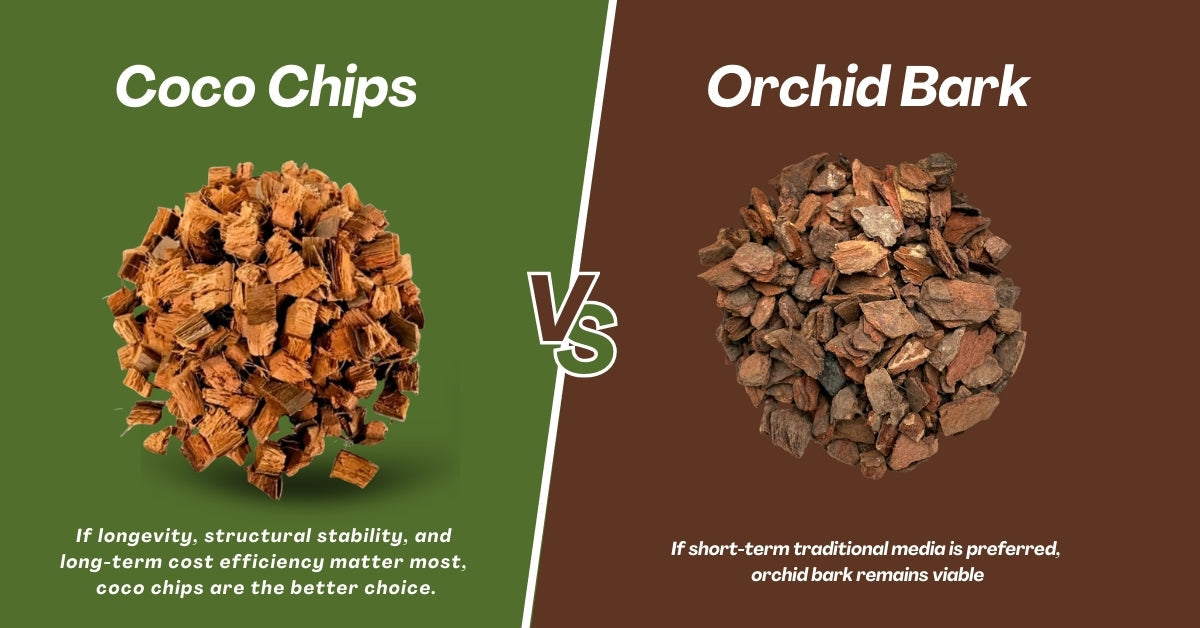
If longevity, structural stability, and long-term cost efficiency matter most, coco chips are the better choice.
If short-term traditional media is preferred, orchid bark remains viable.
For growers looking to reduce repotting frequency while maintaining excellent drainage, TrueCoirs coco chips provide a reliable alternative to conventional bark substrates.
