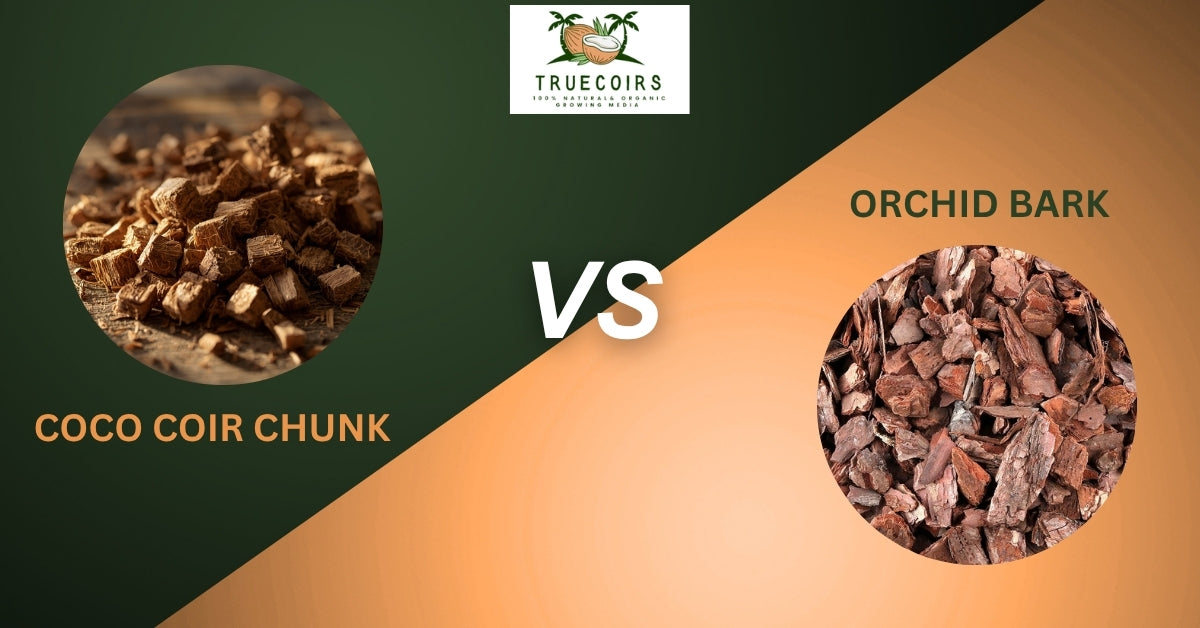
Can Coco Coir Chunks Replace Orchid Bark? What Growers and the Data Say
Highlights / Key Takeaways
- Coco coir chunks provide excellent aeration and moisture balance for orchids and tropical plants.
- Many growers now use coco chunks as a sustainable alternative to orchid bark.
- Coconut coir chunks typically retain moisture longer than traditional bark mixes.
- Coco chunks decompose slower than some bark products and create less substrate waste.
- Proper watering and flushing techniques are important when transitioning from bark to coco chunks.
Introduction
Orchid bark has been a staple growing medium for decades, especially for orchids, monsteras, philodendrons, and other tropical plants that thrive in airy root environments. But as sustainability concerns grow and bark prices continue to rise, many commercial growers and houseplant enthusiasts are asking an important question:
Can coco coir chunks replace orchid bark?
The answer is increasingly becoming “yes” — and the horticultural data supports it.
Coco coir chunks, also called coconut husk chips or coco chunks, are gaining popularity because they offer strong aeration, improved moisture retention, and a more sustainable supply chain compared to traditional bark substrates. In this guide, we’ll compare orchid bark vs coco coir chunks using grower experiences, university-backed studies, and practical cultivation insights.
What Are Coco Coir Chunks?
Coco coir chunks are coarse pieces of processed coconut husk commonly used in:
- Orchid potting mixes
- Chunky aroid soil blends
- Tropical plant substrates
- Hydroponic growing systems
- Commercial greenhouse production
Unlike fine coco peat, coco chunks create larger air pockets around roots, making them ideal for epiphytic plants that dislike compacted or soggy soil.
Because coconut husks are a renewable byproduct of the coconut industry, coco chunks are also considered a more sustainable growing medium than harvested bark products.
Why Growers Traditionally Use Orchid Bark
Orchid bark became popular because it offers:
Excellent Drainage
Large bark particles allow oxygen circulation around roots.
Root Stability
The chunky texture helps anchor orchids and climbing tropical plants.
Reduced Root Rot Risk
Fast drainage minimizes stagnant moisture around sensitive roots.
However, orchid bark also comes with challenges:
- Bark breaks down over time
- Quality varies by manufacturer
- Some bark mixes become acidic as they decompose
- Supply costs have increased in commercial horticulture
These limitations are driving more growers to explore coco chunk substrates.
How Coco Coir Chunks Compare to Orchid Bark
Moisture Retention
One of the biggest differences is water retention.
Coco coir chunks naturally hold more moisture than bark while still maintaining airflow. This creates a more stable moisture environment for tropical plants that prefer consistent hydration.
Coco Chunks Are Ideal For Plants Such as:
- Monsteras
- Philodendrons
- Anthuriums
- Young orchids
- Tropical greenhouse production
Orchid Bark Is Often Preferred For:
- Drier-growing orchid species
- Growers who water frequently
- Cooler indoor environments
Aeration & Root Health
Good root oxygenation is essential for orchids and epiphytic plants.
High-quality coco chunks create excellent pore space that allows roots to breathe while preventing compaction. Many growers find that chunky coconut coir blends support vigorous root development similar to bark-based mixes.
For growers building custom tropical mixes, combining coco coir chunks with perlite, pumice, and charcoal can create a highly optimized chunky substrate for root health.
You can also explore related topics like best chunky potting mix recipes for monstera and aroids to further customize your tropical plant blends.
Sustainability Benefits
One major advantage of coco chunks is sustainability.
Orchid bark is typically harvested from forestry byproducts, while coco coir is produced from coconut husks that would otherwise become agricultural waste.
As peat-free and eco-friendly gardening continues growing across the USA, nurseries and hobby growers are increasingly switching to renewable substrates like coconut coir chunks.
Environmental Advantages of Coco Chunks
- Renewable resource
- Lower waste production
- Reduced dependency on bark harvesting
- Reusable in some growing systems
- Biodegradable and compostable
What the Research Says
Several horticultural studies support the use of coconut husk chips and coir-based substrates as alternatives to bark.
A study published in Scientia Horticulturae found coconut husk chips performed comparably to bark substrates for orchid cultivation under controlled irrigation conditions. Researchers observed strong root growth and favorable water management characteristics.
Additional agricultural research has shown coir-based substrates provide:
- High air-filled porosity
- Strong water-holding capacity
- Stable structural performance
- Suitability for epiphytic plant cultivation
Commercial growers are also adopting coco chunk substrates because they provide consistency across large-scale production environments.
Potential Downsides of Coco Chunks
While coco chunks offer many benefits, growers should still understand a few considerations.
Higher Moisture Retention
Because coco chunks hold more water, overwatering can become an issue if irrigation habits are not adjusted.
Salt Content
Low-quality coco products may contain residual salts if not properly washed and buffered.
Always choose:
- Washed coco coir chunks
- Buffered coconut coir products
- Horticultural-grade substrates
Fertilizer Management
Coco-based media may require calcium and magnesium supplementation depending on the growing setup.
Best Plants for Coco Coir Chunk Mixes
Coco chunks work especially well for:
- Orchids
- Monsteras
- Philodendrons
- Anthuriums
- Hoyas
- Alocasias
- Tropical greenhouse plants
Many growers now create custom chunky mixes using:
- Coco chunks
- Perlite
- Charcoal
- Pumice
- Coco peat
If you’re growing tropical plants indoors, understanding how to use coco coir chunks without causing root rot can help improve long-term plant health and watering consistency.
Should You Replace Orchid Bark with Coco Chunks?
For many growers, the answer is yes.
Coco coir chunks can successfully replace orchid bark in many applications — especially for tropical plants that benefit from improved moisture retention and sustainable growing practices.
However, the ideal substrate still depends on:
- Plant species
- Climate
- Humidity levels
- Watering habits
- Container type
Some growers even combine orchid bark and coco chunks together for a balanced hybrid mix.
Conclusion
Coco coir chunks are no longer just an alternative growing medium — they are becoming a preferred substrate for many orchid and tropical plant growers across the USA.
With strong aeration, better moisture balance, and sustainability advantages, coco chunks offer a modern solution for both hobby growers and commercial nurseries.
As more growers seek peat-free and renewable growing media, coconut coir chunks are positioned to become one of the leading substrates in tropical horticulture.
Sources & Citations
-
Scientia Horticulturae — Coconut Husk Chips in Orchid Cultivation
https://www.sciencedirect.com/science/article/pii/S0304423821002405 -
Brazilian Agricultural Research Corporation (Embrapa) — Coir-Based Substrates in Horticulture
https://apct.sede.embrapa.br/pab/article/view/4552 -
Royal Horticultural Society (RHS) — Growing Media & Sustainable Alternatives
https://www.rhs.org.uk/soil-composts-mulches/peat-free
