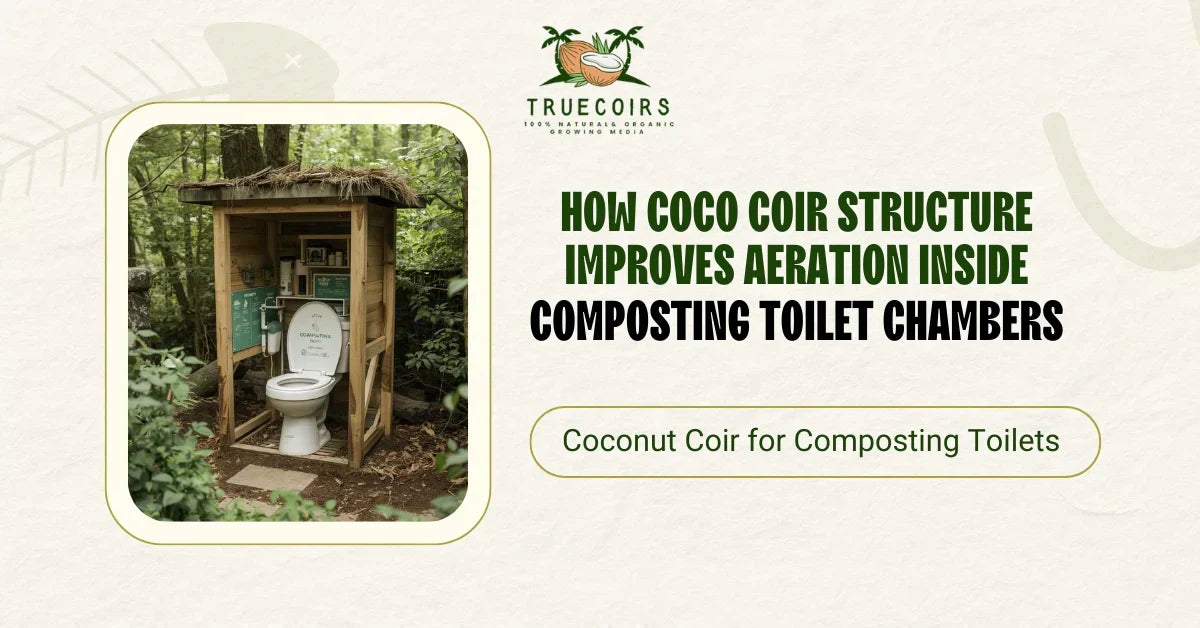
How Coco Coir Structure Improves Aeration Inside Composting Toilet Chambers
Highlights / Key Takeaways
-
Explore why coco coir for composting toilets is superior for airflow and microbiology.
-
Understand how fiber structure promotes aeration in composting toilets and prevents odors.
-
Learn practical steps for preparing coco coir for composting toilet use.
-
Compare coconut fiber compost toilet media vs traditional bulking agents.
-
Get performance tips to maintain aerobic composting and system longevity.
Introduction
In high-performance composting toilet systems, oxygen availability isn’t just beneficial — it’s essential. Without proper aeration, waste decomposition shifts toward anaerobic microbiology, generating odors and slowing matter breakdown. Selecting the right bulking and media material is one of the most impactful decisions operators can make. That’s where coco coir for composting toilet applications stands out.
This article dives into the science behind coco coir’s fiber structure, how it enhances aeration, and best practices for preparation and use. If you’re optimizing a composting toilet — from residential off-grid systems to large-scale eco-sanitation projects — this guide equips you to improve performance with the best coco coir for composting toilet environments.
Why Aeration Matters in Composting Toilet Chambers
Aerobic vs Anaerobic Composting
Aerobic composting relies on oxygen-loving microbes to break down waste rapidly and with minimal odor. In contrast, anaerobic composting — driven by microbes that thrive without oxygen — produces foul smells like hydrogen sulfide and slows the entire process.
Maintaining aeration within a composting toilet chamber:
-
Keeps microbial activity aerobic
-
Reduces pathogen survival times
-
Minimizes odors
-
Enhances decomposition rates
Integrating a material that naturally supports airflow helps prevent anaerobic zones from forming in the media.
Coco Coir’s Fiber Structure: A Natural Aeration Enhancer
What Makes Coco Coir Ideal?
Coco coir — derived from the husk of coconut — features:
-
A network of interlocking fibers
-
Consistent porosity
-
Strong capillary action
-
Durable physical structure
Unlike fine sawdust or dense organic fillers, coco coir maintains micro- and macro-air spaces that:
-
Facilitate gas exchange
-
Reduce compaction under load
-
Support aerobic microbes by sustaining oxygen pathways
This innate structure makes coconut fiber for composting toilet systems a top choice when aeration is a priority.
How Coco Coir Prevents Anaerobic Composting
Fiber Structure and Air Pathways
The porous structure of coir naturally resists compression. When mixed with humanure or other feedstocks:
-
Voids between fibers trap air pockets
-
These air pockets act as reservoirs for breathable oxygen
-
As microbe populations consume O₂, the fiber matrix continues to deliver fresh air from above or through designed ventilation
This is a critical advantage over compact, powdery media that collapse and seal off oxygen pathways.
Preparing Coco Coir for Composting Toilet Use
Best Practices
Before adding coir to your chamber, prepare it to maximize performance:
-
Hydrate the Coir
-
Dry coir is too fluffy and can float or blow away.
-
Rehydrate with clean water until it reaches a moist, crumbly texture.
-
Fluff to Stabilize Air Channels
-
Break up clumps so fibers are loose and interwoven.
-
This preserves air pockets and prevents settling.
-
Optional Additives
-
Mix with coarse bulking agents like wood chips or rice hulls to further increase macroporosity.
-
Avoid overly fine materials that can clog airflow.
-
Target Moisture Range
-
Aim for ~40–60% moisture content.
-
Too dry = microbial inactivity; too wet = pore blockage and anaerobic conditions.
Using coconut husk for composting toilet media in this way ensures each chamber charge starts with optimal texture and airflow.
Comparing Coco Coir to Other Bulking Media
|
Property |
Coco Coir |
Sawdust |
Peat |
Wood Chips |
|
Aeration Support |
High |
Medium |
Low |
High |
|
Odor Control |
Excellent |
Good |
Moderate |
Good |
|
Moisture Buffering |
Excellent |
Low |
High |
Low |
|
Compaction Risk |
Low |
High |
High |
Low |
As shown above, coco coir is a standout when balancing aeration, moisture buffering, and odor suppression.
Integrating with Your Composting Toilet System
When designing or upgrading your system:
-
Layer coir with waste to maintain consistent porosity.
-
Monitor chamber moisture and adjust hydration levels of the coir accordingly.
-
Use the best coco coir for composting toilet sources to maintain uniform fiber quality.
For detailed comparisons, check our guides on choosing the right compost media and how ventilation design impacts aeration.
Conclusion
Optimizing aeration is fundamental to effective composting toilet performance — and the fiber structure of coco coir for composting toilet media delivers on that need. Its porous, resilient matrix supports aerobic microbiology, reduces odors, and improves decomposition rates when prepared correctly.
Whether you’re fine-tuning an existing unit or building a new installation, integrating high-quality coco coir and preparing it well is a simple, high-impact step toward a healthier, more efficient composting process.
Get in Touch with Us for Expert Guidance on Using Coco Coir for Composting Toilets
🌱 Explore Premium Coco Coir Products