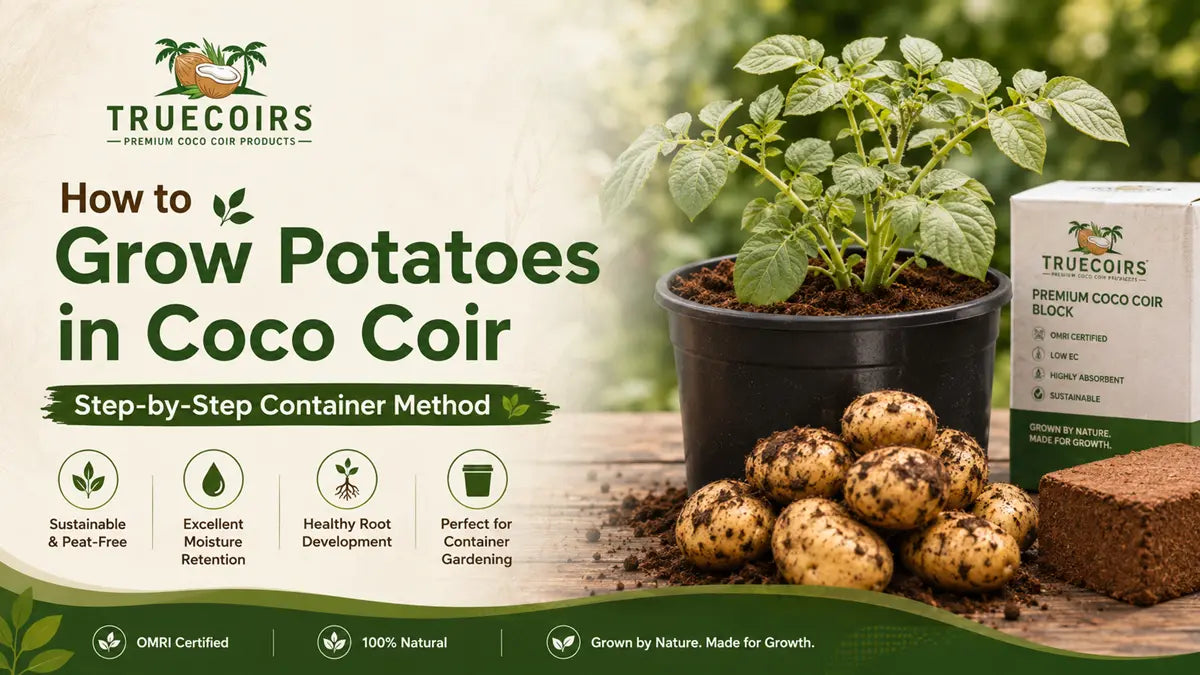
How to Grow Potatoes in Coco Coir (Step-by-Step Container Method)
Highlights
- Learn why coco coir is an excellent growing medium for potatoes.
- Discover the best way to grow potatoes in containers.
- Follow a simple step-by-step planting and care guide.
- Understand watering, fertilizing, and hilling techniques.
- Maximize your potato harvest with premium coco coir.
Growing potatoes doesn't require a large backyard or traditional garden soil. With the right container and a quality coco coir growing medium, you can produce healthy, delicious potatoes on a patio, balcony, greenhouse, or small garden.
Coco coir has become one of the most popular alternatives to conventional potting soil because it offers excellent drainage, superior aeration, and consistent moisture retention. Unlike heavy garden soil, coco coir creates an ideal environment for strong root development while reducing compaction around developing tubers.
Whether you're a beginner or an experienced gardener, this guide explains exactly how to grow potatoes in coco coir from planting to harvest.
Why Grow Potatoes in Coco Coir?
Potatoes thrive in loose, well-aerated growing media. Since developing tubers need space to expand, compact soil can reduce yields and increase the chance of misshapen potatoes.
Premium coco coir offers several advantages:
- Excellent water retention without becoming waterlogged
- Superior airflow around roots
- Lightweight for container gardening
- Peat-free and environmentally friendly
- Low compaction throughout the growing season
- Easy to handle and clean
Quality coco coir products are naturally renewable and provide an excellent base for container vegetables when combined with proper nutrition. TrueCoirs offers OMRI-certified coco coir blocks and bricks designed for gardening and horticultural applications.
Why Coco Coir Works Better Than Regular Potting Soil
|
Coco Coir |
Traditional Potting Soil |
|
Excellent drainage |
Can become compacted |
|
High oxygen availability |
Reduced airflow over time |
|
Lightweight |
Heavy containers |
|
Sustainable and peat-free |
Often peat-based |
|
Easy to rehydrate |
Can dry unevenly |
|
Better root development |
May restrict tuber growth |
Best Way to Grow Potatoes in Containers
Container gardening offers better control over moisture, pests, and harvesting.
Choose:
- 10–20 gallon grow bags
- Large plastic containers
- Fabric pots
- Raised containers with drainage holes
A container should be at least:
- 16–20 inches deep
- 18 inches wide
More space allows the potato plant to produce additional tubers.
Materials You'll Need
- Seed potatoes (certified disease-free)
- Premium coco coir
- Large growing container
- Balanced vegetable fertilizer
- Compost or worm castings (optional)
- Watering can
- Garden gloves
For best results, many gardeners mix:
- 70% coco coir
- 30% compost or quality organic potting mix
This combination improves nutrition while maintaining excellent drainage.
Mid-Article Tip
If you're starting multiple vegetable containers, using compressed coco coir blocks makes storage easier and expands into a large volume of growing medium after hydration. TrueCoirs' premium coco coir blocks expand significantly after adding water, making them ideal for container gardens of all sizes.
Grow Healthier Potatoes with Premium Coco Coir
Give your container garden the perfect growing medium. True Coirs' premium OMRI-certified coco coir provides excellent drainage, moisture retention, and aeration for stronger roots and bigger potato harvests.
Shop Premium Coco CoirStep 1: Prepare the Coco Coir
Compressed coco coir blocks or Coco coir bricks must be hydrated before use.
How to hydrate:
- Place the block in a large tub.
- Slowly add warm water.
- Allow 30–40 minutes for expansion.
- Break apart any remaining compressed sections.
- Fluff until light and airy.
Avoid soaking the coir excessively.
The final texture should feel moist—not dripping wet.
Step 2: Fill Your Container
Add approximately 4–6 inches of hydrated coco coir mixture to the bottom.
Place the seed potatoes with:
- Eyes facing upward
- 8–10 inches apart
Cover with another 3–4 inches of coco coir.
Do not completely fill the container yet.
Leaving extra space allows you to hill the plants later.
Step 3: Water Properly
Coco coir retains moisture exceptionally well while maintaining airflow.
Water thoroughly after planting.
Afterward:
- Keep the medium consistently moist
- Avoid standing water
- Never allow complete drying
Unlike garden soil, coco coir drains quickly, reducing the chance of root rot while still holding enough moisture for healthy growth.
Step 4: Provide Plenty of Sunlight
Potatoes require:
- 6–8 hours of direct sunlight daily
- Temperatures between 60°F and 75°F
Containers can easily be moved to maximize sun exposure throughout the season.
Step 5: Hill Your Potatoes
One of the most important steps is hilling.
As stems grow to about 6–8 inches tall:
- Add another layer of coco coir around the stems.
- Leave only the top leaves exposed.
Repeat every few weeks until the container is nearly full.
Why hilling matters
Hilling:
- Encourages more potato production
- Prevents sunlight from turning potatoes green
- Supports stronger stems
- Increases overall yield
Hilling with coco coir is much easier than using heavy soil because it remains loose and lightweight.
Fertilizing Potatoes in Coco Coir
Unlike garden soil, coco coir contains very few nutrients.
Feed regularly with:
- Balanced vegetable fertilizer
- Compost tea
- Fish emulsion
- Organic tomato fertilizer
Begin feeding after the first leaves appear.
Repeat every 2–3 weeks according to product instructions.
Common Watering Mistakes
Avoid these common problems:
Overwatering
- Too much water can reduce oxygen around the roots.
Underwatering
- Dry coco coir may stress the plants and reduce tuber production.
Inconsistent watering
- Large fluctuations in moisture can lead to cracked potatoes.
- Aim for evenly moist growing media throughout the season.
Best Soil Mix for Potatoes in Containers
A recommended mix includes:
- 70% coco coir
- 20% compost
- 10% perlite
This blend provides:
- Excellent drainage
- Better moisture retention
- Improved aeration
- Healthy microbial activity
- Strong root development
Common Problems and Solutions
Yellow Leaves
Possible causes:
- Nitrogen deficiency
- Overwatering
- Poor drainage
- Solution:
Adjust watering and apply a balanced fertilizer.
Small Potato Harvest
Possible causes:
- Container too small
- Not enough sunlight
- Inadequate hilling
Solution:
Use larger containers and continue adding coco coir as plants grow.
Green Potatoes
Potatoes exposed to sunlight develop chlorophyll and solanine.
Prevent this by:
- Hilling regularly
- Keeping tubers completely covered
When to Harvest Potatoes
New potatoes can usually be harvested:
- 70–90 days after planting
For mature potatoes:
Wait until:
- Leaves yellow
- Stems begin dying back
Stop watering for about one week before harvesting.
Simply empty the container and collect your potatoes—one of the biggest advantages of container gardening.
Why Choose Premium Coco Coir?
The quality of your growing medium has a direct impact on plant health and harvest size.
Premium coco coir provides:
- Consistent texture
- Low salt content
- Excellent expansion
- Better moisture balance
- Sustainable production
TrueCoirs supplies factory-direct, OMRI-certified coconut coir blocks, bricks, and other coco coir products suitable for home gardeners and commercial growers alike.
Frequently Asked Questions
Can potatoes grow in 100% coco coir?
Yes, but because coco coir contains very few nutrients, regular fertilization is essential for healthy growth and good yields.
Is coco coir better than soil for potatoes?
For container gardening, coco coir often performs better because it offers better drainage, improved aeration, and reduced soil compaction.
How often should I water potatoes in coco coir?
Water whenever the top inch of the growing medium begins to dry. The exact frequency depends on weather, container size, and plant growth.
Can I reuse coco coir?
Yes. After harvesting, remove old roots, rinse if necessary, refresh with compost or nutrients, and reuse for future growing seasons.
Conclusion
Growing potatoes in coco coir is one of the easiest and most effective ways to enjoy a productive container garden. Its excellent moisture retention, superior drainage, and lightweight texture create ideal conditions for healthy root systems and abundant potato harvests. By following proper watering, fertilizing, and hilling practices, even beginners can grow high-quality potatoes in limited spaces.
Ready to start your container garden? Choose premium, OMRI-certified coco coir from TrueCoirs to give your potatoes the best possible growing environment and enjoy healthier plants with bigger harvests throughout the season.
References
-
USDA National Agricultural Library – Hydroponics and Growing Media
https://www.nal.usda.gov/farms-and-agricultural-production-systems/hydroponics -
USDA Agricultural Research Service – Potato Research
https://www.ars.usda.gov/ -
USDA APHIS – Seed Potato Certification Program
https://www.aphis.usda.gov/ -
University of Maine Cooperative Extension – Growing Potatoes
https://extension.umaine.edu/publications/2432e/ -
University of Minnesota Extension – Growing Potatoes in Home Gardens
https://extension.umn.edu/vegetables/growing-potatoes -
Penn State Extension – Potatoes in the Home Garden
https://extension.psu.edu/potatoes-in-the-home-garden -
University of Illinois Extension – Growing Potatoes
https://extension.illinois.edu/ -
Royal Horticultural Society (RHS) – Growing Potatoes
https://www.rhs.org.uk/vegetables/potatoes/grow-your-own -
National Capital Poison Center – Green Potatoes and Solanine
https://www.poison.org/articles/are-green-potatoes-safe-to-eat -
Coco Coir Global – Benefits of Coco Coir in Horticulture (Industry Reference)
https://www.cococoirglobal.com/ -
FAO (Food and Agriculture Organization) – Sustainable Growing Media Resources
https://www.fao.org/
Ready to Start Growing?
Whether you're planting potatoes, vegetables, herbs, or flowers, True Coirs offers high-quality coco coir products trusted by home gardeners and professional growers alike.
Experience better drainage, improved root development, and sustainable gardening with premium coconut coir.
Buy Premium Coco Coir Today!)