How to Set Up and Maintain Clean, Healthy Animal Bedding
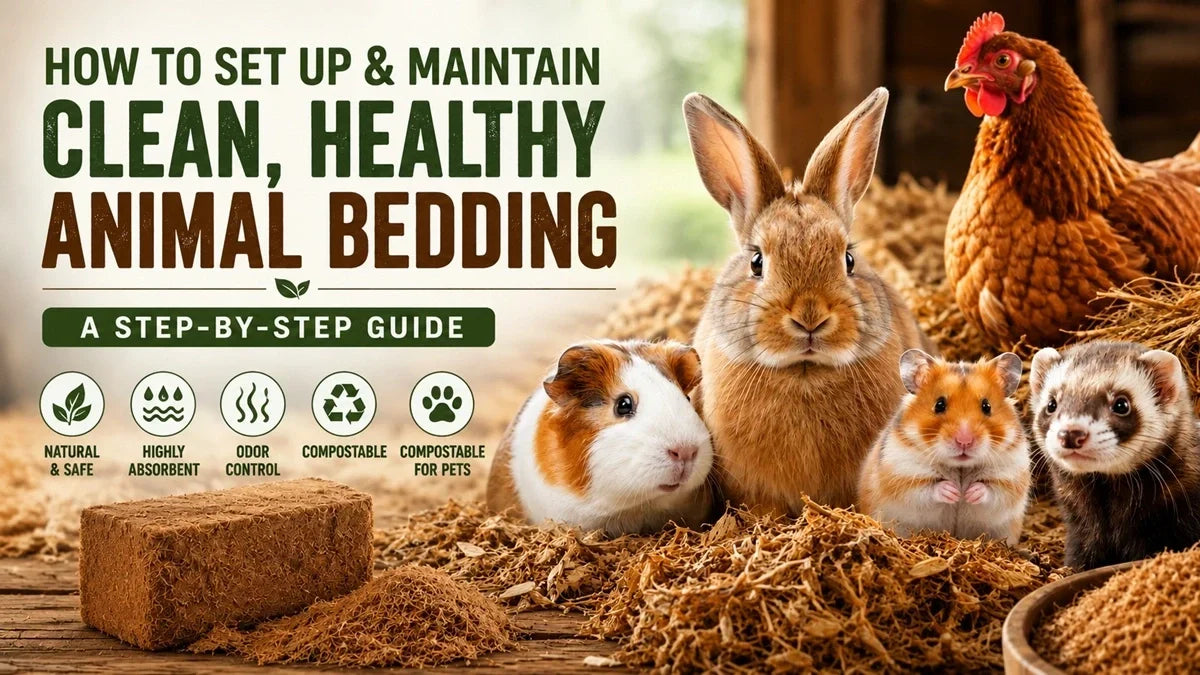
Introduction
Clean, comfortable bedding plays an important role in the daily care of pets, small animals, poultry, and other animals. The right animal bedding can help manage moisture, reduce unpleasant odors, provide a comfortable resting surface, and make routine cleaning easier.
But choosing bedding is only the first step. Bedding needs to be prepared correctly, maintained regularly, and replaced when it becomes excessively damp or soiled.
Natural materials such as coco coir offer an interesting bedding option because coconut coir is lightweight, fibrous, absorbent, and versatile. TrueCoirs offers natural coco coir products designed for applications including animal bedding and other organic growing uses.
This guide explains how to set up and maintain clean, healthy animal bedding while helping you choose an appropriate bedding material for your animal's needs.
Why Choosing the Right Animal Bedding Matters
Animals spend a significant amount of time in their enclosure, coop, hutch, cage, or resting area. Bedding therefore needs to do more than simply cover the floor.
Good bedding should ideally:
- Help absorb moisture
- Keep the resting area more comfortable
- Make waste easier to manage
- Help control unpleasant odors
- Be practical to clean and replace
- Suit the animal's natural behaviors
- Fit the enclosure and ventilation conditions
- Be free from unnecessary contaminants and irritants
Different animals also have different requirements. Hamster bedding, for example, needs to accommodate burrowing behavior, while chicken bedding needs to handle droppings and moisture in a coop environment.
Important: Always consider the specific husbandry requirements of your animal and follow advice from a veterinarian or reputable animal-care organization when selecting bedding.
Step 1: Choose Bedding for the Animal
There is no universal “best bedding” for every animal.
Small Animal Bedding
Small mammals such as hamsters, rabbits, guinea pigs, rats, mice, ferrets, and chinchillas have different environmental and behavioral needs.
When comparing small animal bedding, consider:
- Dust levels
- Absorbency
- Texture
- Odor management
- Ease of cleaning
- Whether the animal burrows, nests, digs, or tunnels
- Whether the material can become wet or compacted
For animals that naturally burrow or create nests, bedding depth and texture can be especially important.
Rabbit and Bunny Bedding
For rabbits and bunnies, bedding should help maintain a clean, dry resting environment.
When choosing rabbit bedding, consider using separate areas for sleeping, eating, and toileting where practical. Frequently soiled areas should be cleaned more often than areas that remain dry.
Hamster Bedding
Hamsters naturally dig and burrow, so hamster bedding should provide an appropriate substrate depth for the animal's enclosure and husbandry setup.
Rather than choosing bedding based solely on price or appearance, look at factors such as texture, cleanliness, dust, and how well the material works with your hamster's natural behaviors.
Chicken Bedding
Chicken bedding has different requirements from bedding for small mammals. A chicken coop needs bedding that can handle droppings, moisture, and regular disturbance.
Common considerations include:
- Moisture management
- Ease of spot cleaning
- Odor control
- Ventilation
- Compostability
- Frequency of replacement
For poultry owners interested in turning coop waste into compost, choosing a suitable chicken bedding for composting can also be valuable.
Step 2: Prepare the Bedding Correctly
Once you have selected suitable bedding, prepare the enclosure before introducing the animal.
Clean the Enclosure
Remove old bedding, waste, food debris, and visibly contaminated material.
Clean the enclosure according to the animal's care requirements and allow surfaces to dry before adding fresh bedding.
Add the Appropriate Bedding Depth
The correct amount depends on the species, enclosure, and type of bedding.
Avoid creating a setup where bedding becomes compressed into a damp layer. At the same time, animals that naturally burrow or nest may benefit from a deeper substrate.
The goal is to create a bedding environment that supports the animal's normal behavior while remaining manageable to clean.
Keep Food and Water Areas Dry
Spilled water can quickly turn otherwise clean bedding into wet bedding.
Position water containers carefully and check the surrounding area regularly. Remove damp bedding as needed rather than allowing moisture to remain throughout the enclosure.
Make Your Bedding Routine More Natural
Discover natural coco coir solutions from TrueCoirs.
Step 3: Monitor Moisture Every Day
One of the simplest ways to maintain healthy bedding is to check it regularly.
Look for:
- Wet patches
- Strong odors
- Clumped bedding
- Visible waste
- Mold or unusual growth
- Excessive dust
- Areas where bedding has become compacted
Spot-cleaning problem areas can extend the useful life of the remaining bedding and reduce unnecessary waste.
Step 4: Spot-Clean Regularly
You don't necessarily need to replace every piece of bedding every time you clean an enclosure.
Instead, remove heavily soiled or wet sections as appropriate for the animal and replace them with fresh material.
This can make routine maintenance more efficient while keeping the enclosure cleaner.
For animals that rely on familiar scents, completely replacing all bedding at once may also unnecessarily disrupt their environment. Follow species-appropriate cleaning practices.
Step 5: Know When to Replace the Bedding
Fresh bedding should be added or the bedding should be replaced when it is:
- Persistently damp
- Heavily soiled
- Producing strong odors
- Compacting excessively
- Difficult to keep clean
- Showing signs of contamination or mold
The ideal cleaning frequency varies by animal, enclosure size, stocking level, bedding material, ventilation, and humidity.
Instead of relying on a single calendar schedule, inspect the enclosure regularly and adjust cleaning frequency accordingly.
Can Coco Coir Be Used as Animal Bedding?
Coco coir is made from coconut fiber and is increasingly used in natural and sustainable applications.
TrueCoirs offers natural coco coir products intended for applications including animal bedding, with products available in compressed formats that expand after hydration.
Coco coir can be useful where its characteristics fit the animal and husbandry system, particularly because it is:
- Plant-based
- Naturally fibrous
- Lightweight
- Moisture-managing
- Compostable under suitable conditions
- Available in compressed formats for convenient storage
However, suitability depends on the animal. Not every animal should automatically be given the same bedding material, so always check species-specific care guidance before changing bedding.
Looking for a Natural Animal Bedding Option?
Explore TrueCoirs natural coco coir products for animal bedding and other sustainable applications. Choose a convenient compressed coir format for easy storage and preparation.
Buy Coco Coir Products Now!Coco Coir vs. Other Animal Bedding Materials
Different bedding materials have different characteristics.
|
Bedding consideration |
Coco coir |
Other bedding materials |
|
Plant-based |
Yes |
Depends on material |
|
Compressed storage |
Available |
Depends on product |
|
Moisture management |
Good potential |
Varies |
|
Composting potential |
Yes, under suitable conditions |
Varies |
|
Lightweight |
Generally |
Varies |
|
Suitable for every animal |
No |
No |
The important question isn't simply “What is the best animal bedding?”
Instead, ask:
“What bedding characteristics are appropriate for this animal and this enclosure?”
How to Maintain Animal Bedding for Better Odor Control
Odor is often a sign that moisture and waste are not being managed effectively.
To improve bedding hygiene:
- Remove wet spots promptly.
- Remove heavily contaminated bedding.
- Keep water containers from leaking.
- Maintain appropriate ventilation.
- Avoid excessive enclosure crowding.
- Keep food and waste areas separated where practical.
- Replace bedding when it can no longer be kept clean.
For rabbits and guinea pigs, for example, owners searching for best rabbit bedding for odor control or best bedding for guinea pigs for smell should consider absorbency, cleaning practices, ventilation, and enclosure design—not simply the bedding material itself.
How to Dispose of Used Animal Bedding
Some natural bedding materials may be suitable for composting, but this depends on what the bedding contains.
Clean plant-based bedding can potentially be incorporated into a composting system.
However, bedding contaminated with unsuitable chemicals, medications, pathogens, or other problematic materials should not automatically be added to compost.
If you are specifically interested in using bedding as a compost ingredient, see our guide to best chicken bedding for composting and learn how bedding materials can fit into a broader composting system.
Animal Bedding Maintenance Checklist
For a simple routine, check your animal's bedding regularly for:
- Moisture
- Waste buildup
- Strong odors
- Mold or contamination
- Compaction
- Excess dust
- Areas that need spot cleaning
- Whether complete replacement is necessary
Regular observation is more useful than relying on a fixed bedding replacement schedule for every animal.
Conclusion
The best animal bedding is not necessarily one specific material. It is the bedding that fits the animal's needs, enclosure, behavior, and cleaning routine.
Whether you're managing hamster bedding, rabbit bedding, guinea pig bedding, chicken bedding, or other small animal bedding, focus on cleanliness, moisture management, appropriate texture, ventilation, and regular maintenance.
Natural coco coir bedding can be an option for suitable applications, particularly for people looking for a plant-based and versatile bedding material.
Explore TrueCoirs to learn more about natural coconut coir products for animal bedding and other applications.
Try Natural Coco Coir for Your Bedding Setup
TrueCoirs offers natural coconut coir in convenient compressed formats, making it easy to store and prepare when you need fresh bedding.
View Coco Coir Products →