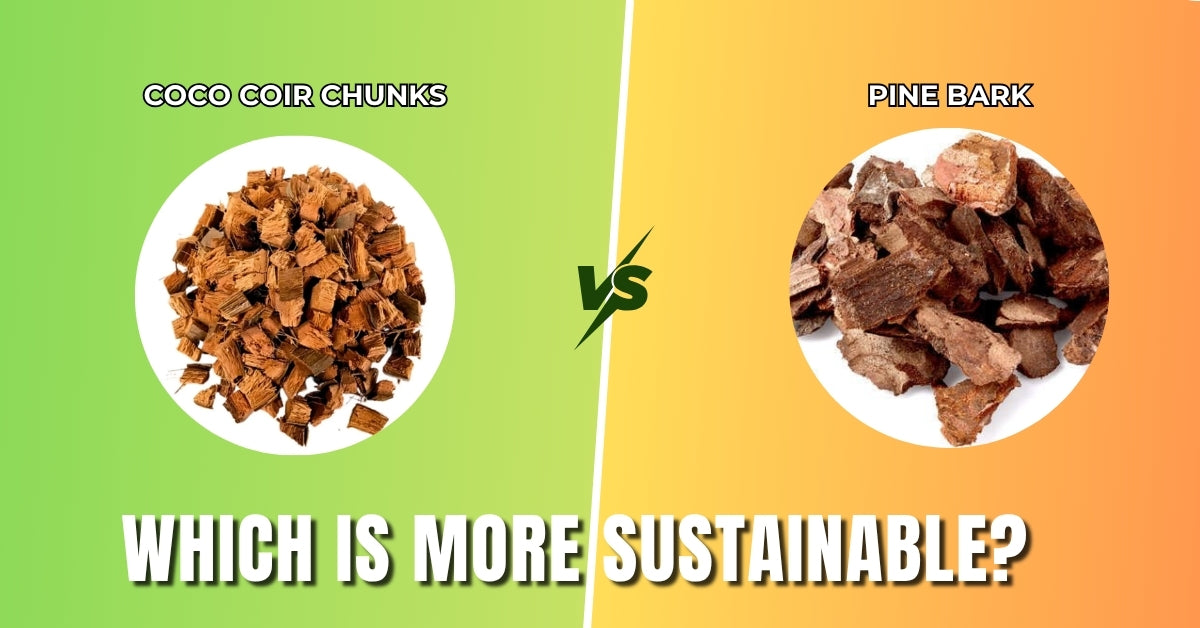
Coco Coir Chunks vs Pine Bark: Which Is More Sustainable?
Understanding Coco Coir Chunks
Coco coir chunks are made from coconut husk, which is a leftover material from the coconut industry. Instead of being thrown away, the husk is processed into chunks and used as a growing medium.
This makes coco coir a more sustainable option because it reuses natural waste and does not require cutting down trees. It also supports better use of existing resources.
In plant care, coco coir chunks are known for holding moisture while still allowing air to reach the roots. This balance helps prevent root rot and supports steady growth. Because of this, they are widely used as an eco growing media for indoor and tropical plants.
What Is Pine Bark?
Pine bark comes from the outer layer of pine trees and has been used in gardening for many years. It is commonly added to potting mixes because it improves drainage and keeps the soil structure loose.
While pine bark is natural and useful, it depends on tree-based resources. Even when it is a byproduct, it is still connected to forestry. Over time, it also breaks down, which means it needs to be replaced to maintain its effectiveness.
Sustainability Comparison: Coco Coir Chunks vs Pine Bark
When comparing coco coir chunks vs pine bark, the biggest difference is how they impact the environment.
Coco coir chunks are made from coconut waste, so no new raw materials are required. This makes them renewable and environmentally friendly. They also help reduce agricultural waste, which is a major benefit for sustainable gardening.
Pine bark, on the other hand, comes from trees. While it can be reused from timber processing, it still depends on natural forest resources. If not managed properly, this can increase pressure on forests over time.
For gardeners who want better sustainable soil amendments, coco coir is usually the stronger choice.
Sustainability Comparison Table
|
Factor |
Coco Coir Chunks |
Pine Bark |
|
Source |
Coconut waste |
Tree bark |
|
Renewability |
High |
Medium |
|
Environmental Impact |
Low |
Medium to High |
|
Eco-Friendliness |
High |
Moderate |
|
Carbon Footprint |
Lower |
Higher |
How Do They Perform for Plants?
Performance matters just as much as sustainability when choosing a growing medium.
Coco coir chunks provide a steady balance of moisture and airflow. They hold enough water to keep roots hydrated while still allowing excess water to drain. This creates a stable environment for plant growth.
Pine bark works differently. It allows water to pass through quickly, which makes it a good option for plants that prefer drier conditions. However, it does not retain moisture for long and can dry out faster.
Another key difference is durability. Coco coir keeps its structure for a longer time, while pine bark slowly breaks down and loses its effectiveness.
Performance Comparison Table
|
Feature |
Coco Coir Chunks |
Pine Bark |
|
Water Retention |
High |
Medium |
|
Drainage |
Good |
Excellent |
|
Aeration |
Excellent |
Good |
|
Lifespan |
Long-lasting |
Breaks down faster |
|
Reusability |
Yes |
Limited |
Which One Should You Choose?
The choice between coco coir chunks vs pine bark depends on your plants and your priorities.
If you are growing indoor plants like orchids, monstera, or philodendron, coco coir chunks are usually the better option. They provide the right balance of moisture and airflow, which helps roots grow strong and healthy.
Pine bark may still be useful for outdoor plants or for situations where fast drainage is needed. It also works well when mixed with other materials.
However, if your focus is on sustainability and long-term use, coco coir offers more advantages.
Cost vs Long-Term Value
At first, pine bark may seem like a cheaper option. But since it breaks down quickly, it needs to be replaced more often. This can increase the total cost over time.
Coco coir chunks may cost slightly more at the beginning, but they last longer and can sometimes be reused. This makes them a better long-term investment for gardeners who want both performance and sustainability.
Common Mistakes to Avoid
A common mistake is choosing a growing medium based only on price. While cost is important, long-term value and sustainability matter just as much.
Another mistake is overwatering, especially when using coco coir. Since it holds moisture well, watering too often can damage the roots.
Many gardeners also forget to replace pine bark after it starts breaking down, which can reduce its effectiveness and affect plant health.
Simple Tips for Better Results
To get the best results, it is helpful to mix materials. Adding perlite or charcoal to coco coir can improve drainage while keeping enough moisture for plant growth.
You can also combine coco coir chunks and pine bark to create a balanced growing medium. This works well for plants that need both airflow and moisture control.
Always adjust your mix based on your plant’s needs and growing conditions.
FAQs
Is coco coir more sustainable than pine bark?
Yes, coco coir chunks are more sustainable because it is made from renewable coconut waste and does not require cutting trees.
Can I mix coco coir chunks and pine bark?
Yes, mixing both can create a balanced growing medium.
Which is better for orchids?
Coco coir chunks are better because they provide both moisture and airflow.
How often should pine bark be replaced?
It should be replaced regularly because it breaks down over time.
What This Means for You
If you are looking for a growing medium that is easy to use, long-lasting, and better for the environment, coco coir chunks are a strong choice. They support healthy plant growth while also reducing environmental impact.
Pine bark can still be useful in certain situations, especially when quick drainage is needed. But for most indoor and tropical plants, coco coir provides better balance and long-term value.
Choosing the right material today can improve your plant care results while helping you move toward more sustainable gardening with better eco growing media and smarter sustainable soil amendments.
